
Written by: Theodore, Reporter in ISFM
A club crisis
When FC Porto was considered as the best team in Portugal it had dominated the league. But the club had issues in 1999, especially instability in the coaching and financial side, crucial parts to keep a club running. The lack of funding from the board meant the club couldn’t sign new players. This saw the club fail in winning the league titles from 1999 to 2001, with their rivals, Sporting CP and Benfica out performing them in the league which upset the fans.
“The Special One”
Luckily, FC Porto appointed Jose Mourinho, or “The special one”. He was 38 when he was appointed as manager in January of 2002 mid-season. He was a professional football player around 14 years ago, having retired at the age of 24. That small experience in the lower divisions of Portugal gave him the understanding of the game to be a master tactician. When he arrived, he managed to turn around Porto’s situation in the league that season, from 5th to 3rd, qualifying them for the champions league. But to Mourinho, this was not enough, promising they would be champions next season.
Master tactics
Mourinho’s tactics relied on a fast counter attacking style, with low blocks with a strategic way of winning the ball such as zonal markings and control over space. The low block was a compact structure that forced opponents to pass the ball wide to the wingers. The full-backs would then get the opportunity to get the ball in their possession, and then launch a quick counter attack, and make runs to support the midfield. Their main objective was to score as quickly as possible before the opposing teams had a chance of positioning themselves. The midfield was the key piece of the team, with Costina being the main pressing defender to prevent the opponents from creating chances, and Deco acting as the play maker, during counter attacks. His role was to make creative passes and therefore create chances and goal scoring opportunities. Maniche was the player who connected and brought the midfield together, a bit like Xavi at Barcelona. The attackers used their finishing and speed to score goals.
Astonishing results in the league
Mourinho’s tactics paid off in the league during the 2003-04 season, with 86 points, 27 wins, 5 draws, and only 2 losses, crowning them champions of Portugal.
A new objective
After that, Mourinho announced that he was aiming for the UEFA Champions League. Porto was also managing to win the Portuguese Cup, but in Europe, only a few clubs outside the top 5 leagues (aka Spain, France, Germany, Italy, and England) have won the title (including Ajax, Benfica, PSV, ect…).
The groups stages
In the group stages, they were facing Partizan Belgrade who they drew and won a game against, Olympique de Marseille was beaten twice by Porto and Real Madrid, who they drew and lost against; not the best group stage but decent considering Los Blancos were in their group.
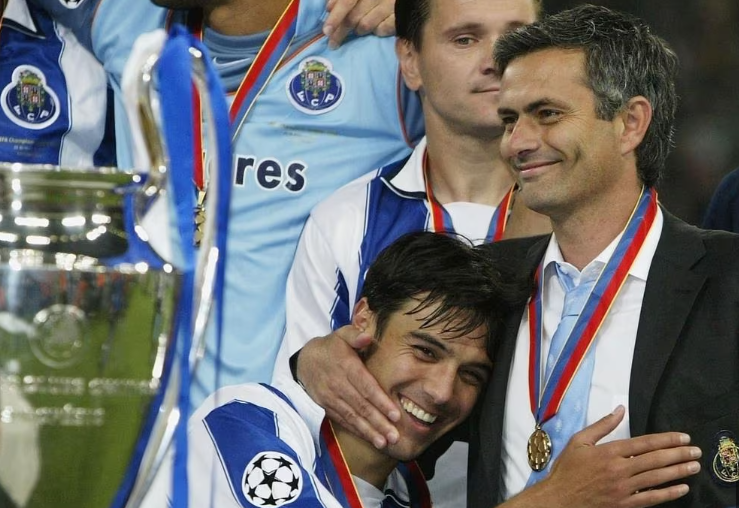
Their next opponent was Manchester United, with the likes of Rio Ferdinand, Tim Howard, Roy Keane, and some might consider him the GOAT: Cristiano Ronaldo although he was still 19. During the first leg, Porto got the better of the red devils 2-1 up, but during the second leg, they were down 0-1 by the 40th minute mark, and by the 80th minute, it looked like Manchester United would go through to the quarter-finals because of the away goal rule. During the first leg, they scored an away goal, and an aggregate tie would mean a victory for the red side of Manchester. But in the 90th minute Costina scored a late goal, sending Porto to the quarter-finals. With it also came Mourinho’s memorable celebration, after Costina scored. After winning 4-2 on aggregate against Olympique Lyonnais, they then beat Diportivo 0-1 on aggregate before thrashing AS Monaco 3-0 in the finals, lifting Porto’s 2nd Champions League and completing the treble with FC Porto.
Written by: Theodore, Reporter in ISFM


Leave a Reply